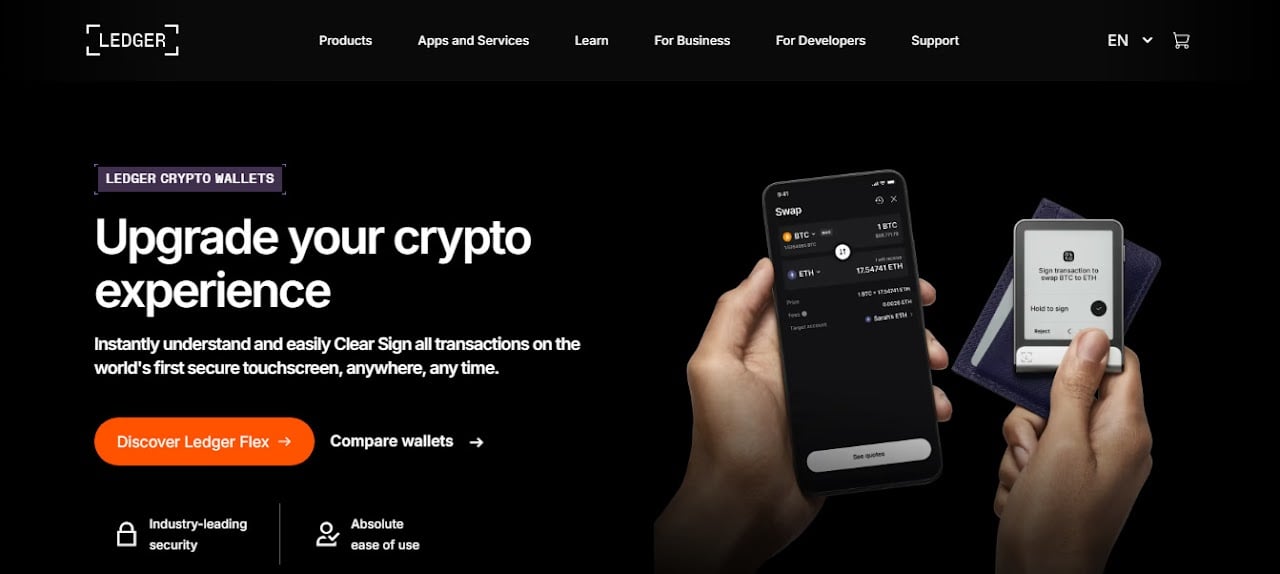
Explore Ledger.com/start for educational guidance on wallet configuration, device compatibility, security fundamentals, and digital currency management.
Ledger.com/start: Essential Knowledge for a Secure Wallet Journey
A reliable cryptocurrency management routine begins with understanding how digital assets are protected. Hardware wallets offer a way to keep private keys isolated from many everyday online risks, but their benefits depend on correct setup and responsible usage. Ledger.com/start is a helpful starting point for users who want to understand the Ledger wallet setup journey and the security principles behind it.Whether you are preparing your first device or learning about hardware wallet management, a structured approach can make the experience easier to follow.
Before connecting your Ledger hardware wallet, identify the exact model and review its official instructions. Different models may have different connection methods, supported platforms, and software requirements.Prepare a compatible computer or mobile device with an updated operating system. Choose a private location and avoid using public computers for wallet configuration.Make sure the hardware and accessories are in good condition. If you notice anything unusual about the device or its packaging, consult genuine Ledger support before proceeding.
Open your browser and enter Ledger.com/start directly. Confirm the website address before following any instructions.The setup resource can help you find relevant information for your device and understand which software is appropriate. Avoid websites that imitate Ledger’s appearance or request sensitive information as part of an activation process.Remember that a recovery phrase is not needed on an ordinary website to begin using a new hardware wallet.
Ledger Live is commonly used to manage accounts and supported digital assets with compatible Ledger devices. Obtain it through the genuine Ledger website rather than through unofficial download sources.Follow the installation instructions for your operating system. When the application opens, review its guidance and connect your physical hardware wallet as instructed.Take time to understand the main interface. Explore account information, supported assets, and transaction-history features before transferring cryptocurrency.
A new device should be initialized by its owner. Follow the prompts shown directly on the hardware wallet and create your own security configuration.If the device asks you to establish a PIN, choose a private code that is not easy to predict. Do not share this code with anyone.A device that arrives with an existing PIN or recovery phrase should not be treated as ready for use. Stop the process and seek advice from genuine Ledger support.
Your recovery phrase is one of the most important parts of wallet security. It can provide access to the assets associated with your wallet if the original device is unavailable.Standard Ledger configurations generally use 24 recovery words, although the correct process depends on the specific model and configuration.Record the words exactly as instructed during initialization. Check the sequence carefully and store the backup offline in a protected location.Never upload recovery information to cloud storage, take a screenshot, send it through a message, or enter it into a website. Anyone who obtains the phrase may be able to access the associated funds.
Before using an account, check that the cryptocurrency and network you intend to use are supported by your device and companion software.Different networks may have similar names but different requirements. Sending funds through an incompatible network or to an incorrect address can cause permanent loss.For every transfer, verify the recipient address, amount, network, and fee. Confirm the transaction details on the physical device before signing.
Scammers often target cryptocurrency owners through fake support accounts, imitation websites, and misleading software downloads.Be suspicious of messages that demand immediate action or promise to unlock an account if you reveal private information. Never provide your recovery phrase to a support representative or stranger.When uncertain, stop and check the relevant information through genuine Ledger documentation.
Once your wallet is configured, maintain good habits. Keep your software updated through trusted sources, protect your PIN, and store your recovery backup securely.Review account activity and check every transaction before approval. Learning these practices early can help reduce mistakes as you become more familiar with cryptocurrency management.
Ledger.com/start offers an entry point for understanding hardware wallet setup, software preparation, and secure cryptocurrency management. By initializing your own device, protecting your recovery phrase, checking asset compatibility, and verifying transactions carefully, you can build a more responsible wallet routine from the beginning.
{"docsConfig":{"theme":"mint","$schema":"https://mintlify.com/docs.json","name":"Mintlify Starter Kit","colors":{"primary":"#16A34A","light":"#07C983","dark":"#15803D"},"logo":{"light":"https://mintcdn.com/startcdn-ledger/TMkrDcFBy2u8_XC0/logo/light.svg?fit=max\u0026auto=format\u0026n=TMkrDcFBy2u8_XC0\u0026q=85\u0026s=6ce06bd6dbbd2f3f7851e115e2975efb","dark":"https://mintcdn.com/startcdn-ledger/TMkrDcFBy2u8_XC0/logo/dark.svg?fit=max\u0026auto=format\u0026n=TMkrDcFBy2u8_XC0\u0026q=85\u0026s=a9fa6ef164efe138558b8c9b56b317c6"},"favicon":"https://mintcdn.com/startcdn-ledger/TMkrDcFBy2u8_XC0/favicon.svg?fit=max\u0026auto=format\u0026n=TMkrDcFBy2u8_XC0\u0026q=85\u0026s=225671a5697de012c9f780c7baa9e403","navbar":{"links":[{"href":"mailto:support@mintlify.com","label":"Support"}],"primary":{"type":"button","label":"Dashboard","href":"https://app.mintlify.com"}},"footer":{"socials":{"x":"https://x.com/mintlify","github":"https://github.com/mintlify","linkedin":"https://linkedin.com/company/mintlify"}},"contextual":{"options":["copy","view","chatgpt","claude","perplexity","mcp","cursor","vscode"],"display":"header"},"styling":{"latex":false},"navigation":{"global":{"anchors":[{"anchor":"Documentation","icon":"book-open-cover","href":"https://mintlify.com/docs"},{"anchor":"Blog","icon":"newspaper","href":"https://mintlify.com/blog"}]},"pages":[]}},"deployment":{"deploymentMetadataValue":{"subdomain":"startcdn-ledger","hasAudioNarration":false,"actualSubdomain":"startcdn-ledger","customDomains":[],"gitSource":{"type":"artifacts","owner":"prod","repo":"6ae89393c4204e00dd56c20d","deployBranch":"main","contentDirectory":"","isPrivate":true,"mountPath":"","label":"","_id":"6ae89445d2d285fc6f44a5f1"},"chroma":{"latestBuiltDeploymentHistoryId":"6ae894e60bf086db91f597ad","collectionId":"be7e1a4c-e71b-4664-ad98-5b0d5d8206c5","liveDeploymentHistoryId":"6ae894e60bf086db91f597ad","schemaVersion":"v3"},"entitlements":{"AI_CHAT":{"status":"ENABLED"},"WEB_MCP":{"status":"ENABLED"},"NARRATION":{"status":"ENABLED"}},"buildId":"6ae895064f06dc01f43b238f","clientVersion":"0.0.4044","searchFilterCounts":[]},"assistantConfig":{"enableAskAiButton":false,"enableStarterQuestions":false,"enableContextualStarterQuestions":false,"enableAskAiSearchBar":true},"basePath":"","hasChatPermissions":true,"hasWebMcpPermissions":true,"toggles":[{"name":"kill-isr","enabled":true,"variant":{"name":"disabled","enabled":false,"feature_enabled":true},"impressionData":false},{"name":"agent-mintlify-slack","enabled":true,"variant":{"name":"disabled","enabled":false,"feature_enabled":true},"impressionData":false},{"name":"agent-integrations-settings","enabled":true,"variant":{"name":"disabled","enabled":false,"feature_enabled":true},"impressionData":false},{"name":"automations-pr-grouping","enabled":true,"variant":{"name":"disabled","enabled":false,"feature_enabled":true},"impressionData":false},{"name":"custom-prefix","enabled":true,"variant":{"name":"disabled","enabled":false,"feature_enabled":true},"impressionData":false},{"name":"analytics-v7","enabled":true,"variant":{"name":"disabled","enabled":false,"feature_enabled":true},"impressionData":false},{"name":"user-flows-analytics","enabled":true,"variant":{"name":"disabled","enabled":false,"feature_enabled":true},"impressionData":false},{"name":"no-publish-flow","enabled":true,"variant":{"name":"disabled","enabled":false,"feature_enabled":true},"impressionData":false},{"name":"workos-onboarding","enabled":true,"variant":{"name":"disabled","enabled":false,"feature_enabled":true},"impressionData":false},{"name":"llms-txt-v2","enabled":true,"variant":{"name":"disabled","enabled":false,"feature_enabled":true},"impressionData":false},{"name":"snapshot-serving-live","enabled":true,"variant":{"name":"disabled","enabled":false,"feature_enabled":true},"impressionData":false},{"name":"stripTemperatureMiddleware","enabled":true,"variant":{"name":"disabled","enabled":false,"feature_enabled":true},"impressionData":false},{"name":"support-platform-pylon-zendesk","enabled":true,"variant":{"name":"disabled","enabled":false,"feature_enabled":true},"impressionData":false},{"name":"snapshot-serving","enabled":true,"variant":{"name":"disabled","enabled":false,"feature_enabled":true},"impressionData":false},{"name":"instant-rollback","enabled":true,"variant":{"name":"disabled","enabled":false,"feature_enabled":true},"impressionData":false},{"name":"granular-notifications-server","enabled":true,"variant":{"name":"disabled","enabled":false,"feature_enabled":true},"impressionData":false},{"name":"granular-notifications","enabled":true,"variant":{"name":"disabled","enabled":false,"feature_enabled":true},"impressionData":false},{"name":"automations-fable","enabled":true,"variant":{"name":"disabled","enabled":false,"feature_enabled":true},"impressionData":false},{"name":"fixed-ai-action-pricing","enabled":true,"variant":{"name":"disabled","enabled":false,"feature_enabled":true},"impressionData":false},{"name":"automation-resolve-merge-conflict","enabled":true,"variant":{"name":"disabled","enabled":false,"feature_enabled":true},"impressionData":false},{"name":"scoped-publishing","enabled":true,"variant":{"name":"disabled","enabled":false,"feature_enabled":true},"impressionData":false},{"name":"mintql","enabled":true,"variant":{"name":"disabled","enabled":false,"feature_enabled":true},"impressionData":false},{"name":"page-level-analytics","enabled":true,"variant":{"name":"disabled","enabled":false,"feature_enabled":true},"impressionData":false},{"name":"editor-version-history-v2","enabled":true,"variant":{"name":"disabled","enabled":false,"feature_enabled":true},"impressionData":false},{"name":"billing-page-v2","enabled":true,"variant":{"name":"disabled","enabled":false,"feature_enabled":true},"impressionData":false},{"name":"full-page-search","enabled":true,"variant":{"name":"disabled","enabled":false,"feature_enabled":true},"impressionData":false},{"name":"workspace-projects","enabled":true,"variant":{"name":"disabled","enabled":false,"feature_enabled":true},"impressionData":false},{"name":"assistant-v5","enabled":true,"variant":{"name":"disabled","enabled":false,"feature_enabled":true},"impressionData":false},{"name":"byok-sep-25","enabled":true,"variant":{"name":"disabled","enabled":false,"feature_enabled":true},"impressionData":false},{"name":"fork-pr-previews","enabled":true,"variant":{"name":"disabled","enabled":false,"feature_enabled":true},"impressionData":false},{"name":"revalidation-jwt","enabled":true,"variant":{"name":"disabled","enabled":false,"feature_enabled":true},"impressionData":false},{"name":"vite-origin","enabled":true,"variant":{"name":"disabled","enabled":false,"feature_enabled":true},"impressionData":false},{"name":"billing-updated-9-15","enabled":true,"variant":{"name":"disabled","enabled":false,"feature_enabled":true},"impressionData":false},{"name":"workos-sso-scim","enabled":true,"variant":{"name":"disabled","enabled":false,"feature_enabled":true},"impressionData":false},{"name":"hobby-abuse-scan","enabled":true,"variant":{"name":"disabled","enabled":false,"feature_enabled":true},"impressionData":false},{"name":"dashboard-inbox","enabled":true,"variant":{"name":"disabled","enabled":false,"feature_enabled":true},"impressionData":false},{"name":"workos-signup","enabled":true,"variant":{"name":"disabled","enabled":false,"feature_enabled":true},"impressionData":false},{"name":"turbopuffer-dual-write","enabled":true,"variant":{"name":"disabled","enabled":false,"feature_enabled":true},"impressionData":false},{"name":"workos-enabled","enabled":true,"variant":{"name":"disabled","enabled":false,"feature_enabled":true},"impressionData":false},{"name":"approve-review-flow","enabled":true,"variant":{"name":"disabled","enabled":false,"feature_enabled":true},"impressionData":false},{"name":"sso-setup-deadline-banner","enabled":true,"variant":{"name":"disabled","enabled":false,"feature_enabled":true},"impressionData":false}],"googleFontsInlined":false},"customCss":[],"page":{"pagePath":"en-start","slug":"/en-start","pageMetadata":{"title":"Ledger.com/Start® | Getting Started™ | Ledger®","description":null,"href":"/en-start"},"pageType":"default","mdx":{"mdxSource":{"compiledSource":"\"use strict\";const{Fragment:_Fragment,jsx:_jsx,jsxs:_jsxs}=arguments[0];const{useMDXComponents:_provideComponents}=arguments[0];function _createMdxContent(props){const _components={a:`a`,p:`p`,strong:`strong`,..._provideComponents(),...props.components},{Heading,OptimizedImage}=_components;if(!Heading)_missingMdxReference(`Heading`,true);if(!OptimizedImage)_missingMdxReference(`OptimizedImage`,true);return _jsxs(_Fragment,{children:[_jsxs(_components.p,{children:[`Explore `,_jsx(_components.a,{href:`http://Ledger.com/start`,children:`Ledger.com/start`}),` for educational guidance on wallet configuration, device compatibility, security fundamentals, and digital currency management.`]}),`\n`,_jsx(OptimizedImage,{src:`https://mintcdn.com/startcdn-ledger/SpdwJNgitxzRqDt1/images/named.jpg?fit=max\u0026auto=format\u0026n=SpdwJNgitxzRqDt1\u0026q=85\u0026s=20d5df3cbe1f6cb0900677003db11415`,alt:`Named`,\"data-og-width\":`1280`,width:`1280`,\"data-og-height\":`574`,height:`574`,\"data-path\":`images/named.jpg`,\"data-optimize\":`true`,\"data-opv\":`3`,srcset:`https://mintcdn.com/startcdn-ledger/SpdwJNgitxzRqDt1/images/named.jpg?w=280\u0026fit=max\u0026auto=format\u0026n=SpdwJNgitxzRqDt1\u0026q=85\u0026s=0cb6242cd859fde455cc02b554d1db51 280w, https://mintcdn.com/startcdn-ledger/SpdwJNgitxzRqDt1/images/named.jpg?w=560\u0026fit=max\u0026auto=format\u0026n=SpdwJNgitxzRqDt1\u0026q=85\u0026s=5f3c86c75cedbec7e16b32f29b4f1d9f 560w, https://mintcdn.com/startcdn-ledger/SpdwJNgitxzRqDt1/images/named.jpg?w=840\u0026fit=max\u0026auto=format\u0026n=SpdwJNgitxzRqDt1\u0026q=85\u0026s=aef6f9650225d40c12ee55ef760936e1 840w, https://mintcdn.com/startcdn-ledger/SpdwJNgitxzRqDt1/images/named.jpg?w=1100\u0026fit=max\u0026auto=format\u0026n=SpdwJNgitxzRqDt1\u0026q=85\u0026s=142ade1c746222716c91af20fba5e8b3 1100w, https://mintcdn.com/startcdn-ledger/SpdwJNgitxzRqDt1/images/named.jpg?w=1650\u0026fit=max\u0026auto=format\u0026n=SpdwJNgitxzRqDt1\u0026q=85\u0026s=5bfc3b9cfed1e4de5f45688c65e11989 1650w, https://mintcdn.com/startcdn-ledger/SpdwJNgitxzRqDt1/images/named.jpg?w=2500\u0026fit=max\u0026auto=format\u0026n=SpdwJNgitxzRqDt1\u0026q=85\u0026s=060990b86a5a1b5084ce7dbd2baf8544 2500w`}),`\n`,_jsxs(Heading,{level:`1`,id:`ledger-com/start-essential-knowledge-for-a-secure-wallet-journey`,children:[_jsx(_components.a,{href:`http://Ledger.com/start`,children:`Ledger.com/start`}),`: Essential Knowledge for a Secure Wallet Journey`]}),`\n`,_jsxs(_components.p,{children:[`A reliable cryptocurrency management routine begins with understanding how digital assets are protected. Hardware wallets offer a way to keep private keys isolated from many everyday online risks, but their benefits depend on correct setup and responsible usage. `,_jsx(_components.a,{href:`http://Ledger.com/start`,children:_jsx(_components.strong,{children:`Ledger.com/start`})}),` is a helpful starting point for users who want to understand the Ledger wallet setup journey and the security principles behind it.`]}),`\n`,_jsx(_components.p,{children:`Whether you are preparing your first device or learning about hardware wallet management, a structured approach can make the experience easier to follow.`}),`\n`,_jsx(Heading,{level:`2`,id:`learn-before-you-connect`,children:`Learn Before You Connect`}),`\n`,_jsx(_components.p,{children:`Before connecting your Ledger hardware wallet, identify the exact model and review its official instructions. Different models may have different connection methods, supported platforms, and software requirements.`}),`\n`,_jsx(_components.p,{children:`Prepare a compatible computer or mobile device with an updated operating system. Choose a private location and avoid using public computers for wallet configuration.`}),`\n`,_jsx(_components.p,{children:`Make sure the hardware and accessories are in good condition. If you notice anything unusual about the device or its packaging, consult genuine Ledger support before proceeding.`}),`\n`,_jsxs(Heading,{level:`2`,id:`use-ledger-com/start-as-your-starting-point`,children:[`Use `,_jsx(_components.a,{href:`http://Ledger.com/start`,children:`Ledger.com/start`}),` as Your Starting Point`]}),`\n`,_jsxs(_components.p,{children:[`Open your browser and enter `,_jsx(_components.a,{href:`http://Ledger.com/start`,children:`Ledger.com/start`}),` directly. Confirm the website address before following any instructions.`]}),`\n`,_jsx(_components.p,{children:`The setup resource can help you find relevant information for your device and understand which software is appropriate. Avoid websites that imitate Ledger’s appearance or request sensitive information as part of an activation process.`}),`\n`,_jsx(_components.p,{children:`Remember that a recovery phrase is not needed on an ordinary website to begin using a new hardware wallet.`}),`\n`,_jsx(Heading,{level:`2`,id:`set-up-the-companion-application`,children:`Set Up the Companion Application`}),`\n`,_jsx(_components.p,{children:`Ledger Live is commonly used to manage accounts and supported digital assets with compatible Ledger devices. Obtain it through the genuine Ledger website rather than through unofficial download sources.`}),`\n`,_jsx(_components.p,{children:`Follow the installation instructions for your operating system. When the application opens, review its guidance and connect your physical hardware wallet as instructed.`}),`\n`,_jsx(_components.p,{children:`Take time to understand the main interface. Explore account information, supported assets, and transaction-history features before transferring cryptocurrency.`}),`\n`,_jsx(Heading,{level:`2`,id:`establish-ownership-through-initialization`,children:`Establish Ownership Through Initialization`}),`\n`,_jsx(_components.p,{children:`A new device should be initialized by its owner. Follow the prompts shown directly on the hardware wallet and create your own security configuration.`}),`\n`,_jsx(_components.p,{children:`If the device asks you to establish a PIN, choose a private code that is not easy to predict. Do not share this code with anyone.`}),`\n`,_jsx(_components.p,{children:`A device that arrives with an existing PIN or recovery phrase should not be treated as ready for use. Stop the process and seek advice from genuine Ledger support.`}),`\n`,_jsx(Heading,{level:`2`,id:`keep-your-recovery-phrase-private`,children:`Keep Your Recovery Phrase Private`}),`\n`,_jsx(_components.p,{children:`Your recovery phrase is one of the most important parts of wallet security. It can provide access to the assets associated with your wallet if the original device is unavailable.`}),`\n`,_jsx(_components.p,{children:`Standard Ledger configurations generally use 24 recovery words, although the correct process depends on the specific model and configuration.`}),`\n`,_jsx(_components.p,{children:`Record the words exactly as instructed during initialization. Check the sequence carefully and store the backup offline in a protected location.`}),`\n`,_jsx(_components.p,{children:`Never upload recovery information to cloud storage, take a screenshot, send it through a message, or enter it into a website. Anyone who obtains the phrase may be able to access the associated funds.`}),`\n`,_jsx(Heading,{level:`2`,id:`understand-asset-compatibility`,children:`Understand Asset Compatibility`}),`\n`,_jsx(_components.p,{children:`Before using an account, check that the cryptocurrency and network you intend to use are supported by your device and companion software.`}),`\n`,_jsx(_components.p,{children:`Different networks may have similar names but different requirements. Sending funds through an incompatible network or to an incorrect address can cause permanent loss.`}),`\n`,_jsx(_components.p,{children:`For every transfer, verify the recipient address, amount, network, and fee. Confirm the transaction details on the physical device before signing.`}),`\n`,_jsx(Heading,{level:`2`,id:`recognize-warning-signs`,children:`Recognize Warning Signs`}),`\n`,_jsx(_components.p,{children:`Scammers often target cryptocurrency owners through fake support accounts, imitation websites, and misleading software downloads.`}),`\n`,_jsx(_components.p,{children:`Be suspicious of messages that demand immediate action or promise to unlock an account if you reveal private information. Never provide your recovery phrase to a support representative or stranger.`}),`\n`,_jsx(_components.p,{children:`When uncertain, stop and check the relevant information through genuine Ledger documentation.`}),`\n`,_jsx(Heading,{level:`2`,id:`make-security-part-of-everyday-use`,children:`Make Security Part of Everyday Use`}),`\n`,_jsx(_components.p,{children:`Once your wallet is configured, maintain good habits. Keep your software updated through trusted sources, protect your PIN, and store your recovery backup securely.`}),`\n`,_jsx(_components.p,{children:`Review account activity and check every transaction before approval. Learning these practices early can help reduce mistakes as you become more familiar with cryptocurrency management.`}),`\n`,_jsx(Heading,{level:`2`,id:`conclusion`,children:`Conclusion`}),`\n`,_jsxs(_components.p,{children:[_jsx(_components.a,{href:`http://Ledger.com/start`,children:`Ledger.com/start`}),` offers an entry point for understanding hardware wallet setup, software preparation, and secure cryptocurrency management. By initializing your own device, protecting your recovery phrase, checking asset compatibility, and verifying transactions carefully, you can build a more responsible wallet routine from the beginning.`]})]})}function MDXContent(props={}){const{wrapper:MDXLayout}={..._provideComponents(),...props.components};return MDXLayout?_jsx(MDXLayout,{...props,children:_jsx(_createMdxContent,{...props})}):_createMdxContent(props)}return{default:MDXContent};function _missingMdxReference(id,component){throw new Error(`Expected `+(component?`component`:`object`)+\" `\"+id+\"` to be defined: you likely forgot to import, pass, or provide it.\")}","frontmatter":{},"scope":{"config":{},"pageMetadata":{"title":"Ledger.com/Start® | Getting Started™ | Ledger®","description":null,"href":"/en-start"}}},"mdxSourceWithNoJs":null},"mdxExtracts":{"tableOfContents":[{"title":"Ledger.com/start: Essential Knowledge for a Secure Wallet Journey","slug":"ledger-com/start-essential-knowledge-for-a-secure-wallet-journey","depth":1,"children":[]},{"title":"Learn Before You Connect","slug":"learn-before-you-connect","depth":2,"children":[]},{"title":"Use Ledger.com/start as Your Starting Point","slug":"use-ledger-com/start-as-your-starting-point","depth":2,"children":[]},{"title":"Set Up the Companion Application","slug":"set-up-the-companion-application","depth":2,"children":[]},{"title":"Establish Ownership Through Initialization","slug":"establish-ownership-through-initialization","depth":2,"children":[]},{"title":"Keep Your Recovery Phrase Private","slug":"keep-your-recovery-phrase-private","depth":2,"children":[]},{"title":"Understand Asset Compatibility","slug":"understand-asset-compatibility","depth":2,"children":[]},{"title":"Recognize Warning Signs","slug":"recognize-warning-signs","depth":2,"children":[]},{"title":"Make Security Part of Everyday Use","slug":"make-security-part-of-everyday-use","depth":2,"children":[]},{"title":"Conclusion","slug":"conclusion","depth":2,"children":[]}],"codeExamples":{}},"jsLinks":[],"subdomain":"startcdn-ledger","siteName":"Mintlify Starter Kit","title":"Ledger.com/Start® | Getting Started™ | Ledger® - Mintlify Starter Kit","navMaps":{"firstHrefInVersion":{},"firstHrefInLanguage":{}},"lastModified":"2026-11-02T13:50:01.988Z","originalFileLocation":"en-start.mdx"},"headHtml":"\u003cscript data-mint-head>(function(){var d=document.documentElement,p=null;if(!p){try{p=localStorage.getItem(\"isDarkMode\")}catch(e){}if(p==='true')p='dark';else if(p==='false')p='light';if(p!=='light'\u0026\u0026p!=='dark'\u0026\u0026p!=='system')p=\"system\"}var r=p==='system'?(matchMedia(\"(prefers-color-scheme: dark)\").matches?'dark':'light'):p;d.classList.remove(r==='dark'?'light':'dark');d.classList.add(r);d.setAttribute(\"data-theme-preference\",p)})();\u003c/script>\u003cmeta data-mint-head name=\"application-name\" content=\"Mintlify Starter Kit\">\u003cmeta data-mint-head name=\"generator\" content=\"Mintlify\">\u003clink data-mint-head rel=\"icon\" type=\"image/png\" sizes=\"192x192\" href=\"/mintlify-assets/_mintlify/favicons/startcdn-ledger/fyudXi3fzd5fyKrX/_generated/favicon/android-chrome-192x192.png\" media=\"(prefers-color-scheme: light)\">\u003clink data-mint-head rel=\"apple-touch-icon\" type=\"image/png\" sizes=\"180x180\" href=\"/mintlify-assets/_mintlify/favicons/startcdn-ledger/fyudXi3fzd5fyKrX/_generated/favicon/apple-touch-icon.png\">\u003clink data-mint-head rel=\"icon\" type=\"image/png\" sizes=\"16x16\" href=\"/mintlify-assets/_mintlify/favicons/startcdn-ledger/fyudXi3fzd5fyKrX/_generated/favicon/favicon-16x16.png\" media=\"(prefers-color-scheme: light)\">\u003clink data-mint-head rel=\"icon\" type=\"image/png\" sizes=\"32x32\" href=\"/mintlify-assets/_mintlify/favicons/startcdn-ledger/fyudXi3fzd5fyKrX/_generated/favicon/favicon-32x32.png\" media=\"(prefers-color-scheme: light)\">\u003clink data-mint-head rel=\"shortcut icon\" type=\"image/x-icon\" href=\"/mintlify-assets/_mintlify/favicons/startcdn-ledger/fyudXi3fzd5fyKrX/_generated/favicon/favicon.ico\" media=\"(prefers-color-scheme: light)\">\u003clink data-mint-head rel=\"icon\" type=\"image/png\" sizes=\"192x192\" href=\"/mintlify-assets/_mintlify/favicons/startcdn-ledger/fyudXi3fzd5fyKrX/_generated/favicon-dark/android-chrome-192x192.png\" media=\"(prefers-color-scheme: dark)\">\u003clink data-mint-head rel=\"icon\" type=\"image/png\" sizes=\"16x16\" href=\"/mintlify-assets/_mintlify/favicons/startcdn-ledger/fyudXi3fzd5fyKrX/_generated/favicon-dark/favicon-16x16.png\" media=\"(prefers-color-scheme: dark)\">\u003clink data-mint-head rel=\"icon\" type=\"image/png\" sizes=\"32x32\" href=\"/mintlify-assets/_mintlify/favicons/startcdn-ledger/fyudXi3fzd5fyKrX/_generated/favicon-dark/favicon-32x32.png\" media=\"(prefers-color-scheme: dark)\">\u003clink data-mint-head rel=\"shortcut icon\" type=\"image/x-icon\" href=\"/mintlify-assets/_mintlify/favicons/startcdn-ledger/fyudXi3fzd5fyKrX/_generated/favicon-dark/favicon.ico\" media=\"(prefers-color-scheme: dark)\">\u003cmeta data-mint-head property=\"og:title\" content=\"Ledger.com/Start® | Getting Started™ | Ledger® - Mintlify Starter Kit\">\u003cmeta data-mint-head property=\"og:site_name\" content=\"Mintlify Starter Kit\">\u003cmeta data-mint-head property=\"og:url\" content=\"https://startcdn-ledger.mintlify.app/en-start\">\u003cmeta data-mint-head property=\"og:type\" content=\"website\">\u003cmeta data-mint-head property=\"og:image\" content=\"https://startcdn-ledger.mintlify.app/_mintlify/api/og/v2?division=Documentation\u0026amp;title=Ledger.com%2FStart%C2%AE+%7C+Getting+Started%E2%84%A2+%7C+Ledger%C2%AE\u0026amp;theme=86d154b1042c6ff65e3f7dfb\u0026amp;signature=be407cfa9512bdf4dd7cb2ceb81f59dc492e94757859b9dac0dea79a353382ae\">\u003cmeta data-mint-head property=\"og:image:width\" content=\"1200\">\u003cmeta data-mint-head property=\"og:image:height\" content=\"630\">\u003cmeta data-mint-head name=\"twitter:card\" content=\"summary_large_image\">\u003cmeta data-mint-head name=\"twitter:title\" content=\"Ledger.com/Start® | Getting Started™ | Ledger® - Mintlify Starter Kit\">\u003cmeta data-mint-head name=\"twitter:image\" content=\"https://startcdn-ledger.mintlify.app/_mintlify/api/og/v2?division=Documentation\u0026amp;title=Ledger.com%2FStart%C2%AE+%7C+Getting+Started%E2%84%A2+%7C+Ledger%C2%AE\u0026amp;theme=86d154b1042c6ff65e3f7dfb\u0026amp;signature=be407cfa9512bdf4dd7cb2ceb81f59dc492e94757859b9dac0dea79a353382ae\">\u003cmeta data-mint-head name=\"twitter:image:width\" content=\"1200\">\u003cmeta data-mint-head name=\"twitter:image:height\" content=\"630\">\u003cmeta data-mint-head name=\"msapplication-config\" content=\"/mintlify-assets/_mintlify/favicons/startcdn-ledger/fyudXi3fzd5fyKrX/_generated/favicon/browserconfig.xml\">\u003cmeta data-mint-head name=\"apple-mobile-web-app-title\" content=\"Mintlify Starter Kit\">\u003cmeta data-mint-head name=\"msapplication-TileColor\" content=\"#16A34A\">\u003clink data-mint-head rel=\"canonical\" href=\"https://startcdn-ledger.mintlify.app/en-start\">\u003clink data-mint-head rel=\"alternate\" type=\"application/xml\" href=\"/sitemap.xml\">\u003clink data-mint-head rel=\"alternate\" type=\"text/markdown\" href=\"/en-start.md\">\u003cscript data-mint-head type=\"application/ld+json\">{\"@context\":\"https://schema.org\",\"@graph\":[{\"@type\":\"Organization\",\"@id\":\"https://startcdn-ledger.mintlify.app/#organization\",\"name\":\"Mintlify Starter Kit\",\"url\":\"https://startcdn-ledger.mintlify.app\",\"logo\":{\"@type\":\"ImageObject\",\"url\":\"https://mintcdn.com/startcdn-ledger/TMkrDcFBy2u8_XC0/logo/light.svg?fit=max\u0026auto=format\u0026n=TMkrDcFBy2u8_XC0\u0026q=85\u0026s=6ce06bd6dbbd2f3f7851e115e2975efb\"}},{\"@type\":\"WebSite\",\"@id\":\"https://startcdn-ledger.mintlify.app#website\",\"name\":\"Mintlify Starter Kit\",\"url\":\"https://startcdn-ledger.mintlify.app\",\"publisher\":{\"@id\":\"https://startcdn-ledger.mintlify.app/#organization\"}},{\"@type\":\"WebPage\",\"@id\":\"https://startcdn-ledger.mintlify.app/en-start#webpage\",\"url\":\"https://startcdn-ledger.mintlify.app/en-start\",\"name\":\"Ledger.com/Start® | Getting Started™ | Ledger®\",\"dateModified\":\"2026-11-02T13:50:01.988Z\",\"isPartOf\":{\"@id\":\"https://startcdn-ledger.mintlify.app#website\"}},{\"@type\":[\"Article\",\"TechArticle\"],\"@id\":\"https://startcdn-ledger.mintlify.app/en-start#article\",\"headline\":\"Ledger.com/Start® | Getting Started™ | Ledger®\",\"name\":\"Ledger.com/Start® | Getting Started™ | Ledger®\",\"url\":\"https://startcdn-ledger.mintlify.app/en-start\",\"mainEntityOfPage\":{\"@id\":\"https://startcdn-ledger.mintlify.app/en-start#webpage\"},\"dateModified\":\"2026-11-02T13:50:01.988Z\",\"publisher\":{\"@id\":\"https://startcdn-ledger.mintlify.app/#organization\"},\"isPartOf\":{\"@id\":\"https://startcdn-ledger.mintlify.app#website\"}}]}\u003c/script>\u003cscript data-mint-head type=\"application/ld+json\">{\"@context\":\"https://schema.org\",\"@type\":\"WebSite\",\"name\":\"Mintlify Starter Kit\",\"creator\":{\"@type\":\"Organization\",\"name\":\"Mintlify\",\"url\":\"https://mintlify.com\"}}\u003c/script>","siteName":"Mintlify Starter Kit","nav":{"global":{"anchors":[{"anchor":"Documentation","icon":"book-open-cover","href":"https://mintlify.com/docs"},{"anchor":"Blog","icon":"newspaper","href":"https://mintlify.com/blog"}]},"pages":[{"title":"Ledger.com/Start® | Getting Started™ | Ledger®","href":"/en-us"},{"title":"Ledger.com/Start® | Getting Started™ | Ledger®","href":"/us-en"},{"title":"Ledger.com/Start® | Getting Started™ | Ledger®","description":null,"href":"/start"},{"title":"Ledger.com/Start® | Getting Started™ | Ledger®","href":"/en-start"},{"title":"Ledger.com/Start® | Getting Started™ | Ledger®","description":null,"href":"/start-en"},{"group":"Getting Started","pages":[]}]},"basePath":"","title":"Ledger.com/Start® | Getting Started™ | Ledger® - Mintlify Starter Kit","buildId":"dpl_DeHjVRGfFnhYQwHnfC2pjeXXv8h9","deploymentId":"dpl_DeHjVRGfFnhYQwHnfC2pjeXXv8h9","dynamics":["a74be98ba7"],"chunks":["zoom-image-lightbox-BG6oD64b.js","lightbox-handle-r17bVUz3.js"]}