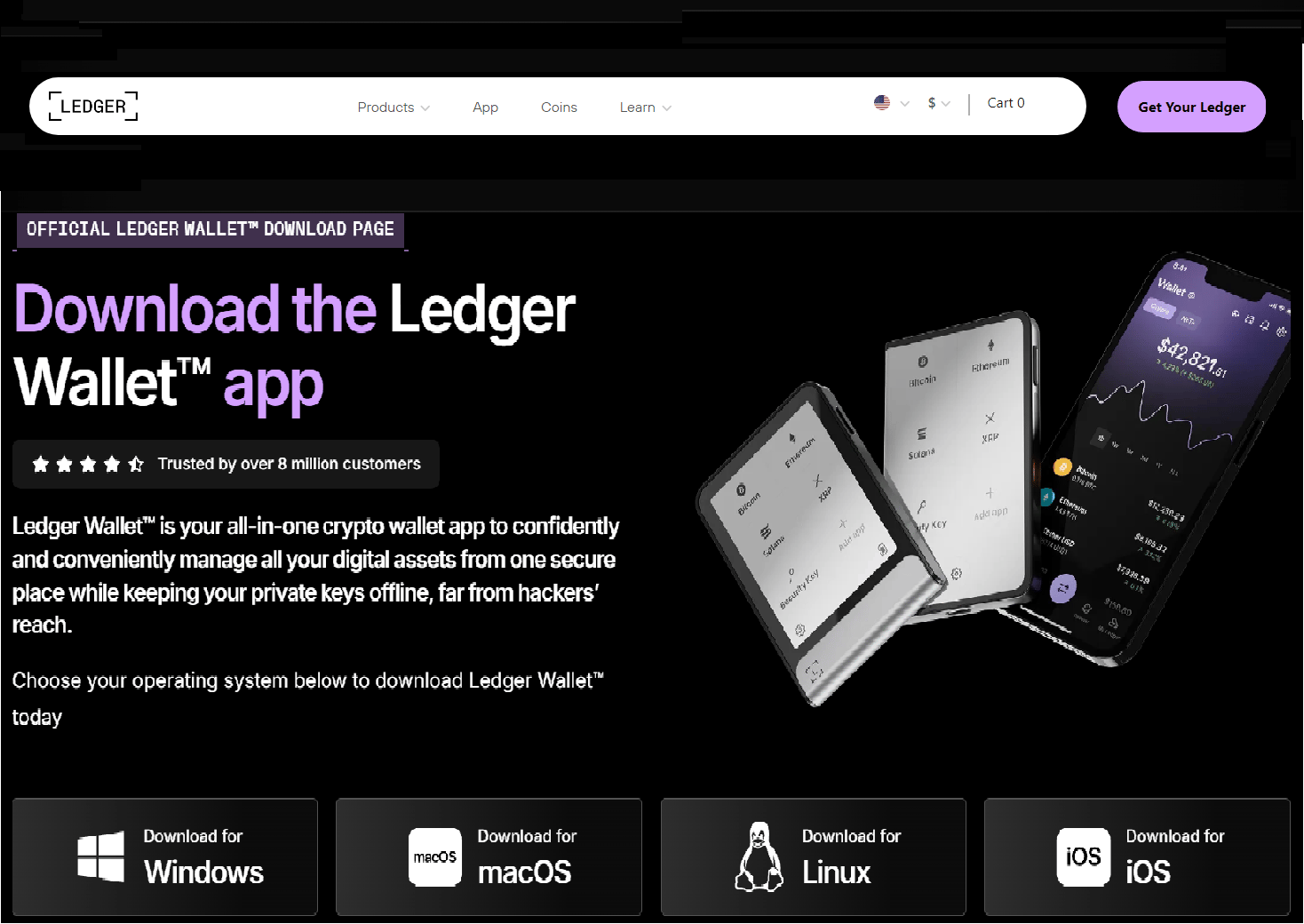
Ledger.com/start: From Initial Configuration to Confident Wallet Use
A hardware wallet can become an important part of a cryptocurrency security strategy, but using one responsibly requires more than completing an installation. Users need to understand how their device is configured, how recovery information is protected, and how transactions are reviewed before approval. Ledger.com/start offers a starting point for exploring these essential parts of the Ledger wallet experience.This guide explains the preparation process and the practical habits that can help users manage digital assets more carefully.
Before connecting your wallet, determine which Ledger hardware model you own. Check its supported operating systems, connection requirements, and available features using the relevant product documentation.Choose a private workspace and use a trusted computer or compatible mobile device. Make sure the device has current security updates and that you have the required accessories.Avoid using shared computers or devices that you do not control. A secure environment makes it easier to concentrate on the instructions and notice unusual activity.
Enter Ledger.com/start directly into your browser rather than following unfamiliar links. Confirm that the address is spelled correctly and that you are accessing the genuine Ledger website.Use the setup resource to identify instructions relevant to your hardware model. Be cautious of websites that imitate Ledger branding or claim that you must enter recovery information to activate your wallet.If a page requests your secret recovery phrase, leave it immediately. Recovery words should never be entered into a website as part of ordinary setup.
Ledger Live is commonly used for managing accounts with supported Ledger hardware wallets. Download it from the genuine Ledger website and check the compatibility requirements before installation.Once the application is available, open it and follow the displayed guidance. Connect your physical device according to the instructions and review any device-recognition prompts.Spend some time learning the interface. Understand where account balances, supported assets, and transaction details appear before attempting to move cryptocurrency.Remember that available software features can change and may differ according to device model, region, and supported assets.
The initial configuration should be completed by the person who will own and control the wallet. Follow the instructions shown on the physical device to create a new configuration.Set a private PIN if prompted. Avoid obvious combinations and never share the code through email, chat, or phone conversations.If your hardware wallet appears to have been configured before you received it, do not use the existing settings. Stop and contact genuine Ledger support to determine the appropriate next step.
A recovery phrase can restore access to the wallet if the original hardware device is lost or damaged. Standard Ledger configurations commonly use 24 words, although the instructions for your exact device should always be followed.Record the phrase directly from the physical device during the approved initialization process. Check every word and preserve its exact order.Keep the backup offline and protected from unauthorized access. Do not store it in a screenshot, notes application, email account, or cloud folder.Your recovery phrase is highly sensitive. No legitimate support representative should ask you to reveal it, and you should never enter it into a third-party website.
Before making a transfer, understand how the approval process works. The companion application may prepare a transaction, but the hardware wallet provides the physical confirmation step for supported operations.Check the destination address, amount, network, and fee. Compare the information on the device screen with the details you intended to approve.If anything does not match, reject the transaction and investigate. Never approve an unfamiliar operation simply because it appears in the application.
Fraudulent support profiles, fake software downloads, and phishing websites can target cryptocurrency owners. Some messages pretend that an account is suspended or that an urgent security update is required.Do not trust unexpected requests for private information. Visit genuine Ledger resources independently and verify suspicious claims before taking action.Keep your software updated through trusted sources and avoid granting remote access to unknown individuals.
Responsible wallet management continues after the initial Ledger.com/start process. Review account activity periodically, protect your device credentials, and maintain a secure offline backup.When exploring a new asset or network, check compatibility first. When sending cryptocurrency, verify every detail before confirming.
Ledger.com/start can help users become familiar with the process of preparing and configuring a Ledger hardware wallet. A careful approach combines genuine software sources, personal device initialization, secure recovery backups, and deliberate transaction verification. By making these practices part of everyday wallet use, users can manage their digital assets with greater awareness and confidence.
{"docsConfig":{"theme":"mint","$schema":"https://mintlify.com/docs.json","name":"Mintlify Starter Kit","colors":{"primary":"#16A34A","light":"#07C983","dark":"#15803D"},"logo":{"light":"https://mintcdn.com/startcdn-ledger/TMkrDcFBy2u8_XC0/logo/light.svg?fit=max\u0026auto=format\u0026n=TMkrDcFBy2u8_XC0\u0026q=85\u0026s=6ce06bd6dbbd2f3f7851e115e2975efb","dark":"https://mintcdn.com/startcdn-ledger/TMkrDcFBy2u8_XC0/logo/dark.svg?fit=max\u0026auto=format\u0026n=TMkrDcFBy2u8_XC0\u0026q=85\u0026s=a9fa6ef164efe138558b8c9b56b317c6"},"favicon":"https://mintcdn.com/startcdn-ledger/TMkrDcFBy2u8_XC0/favicon.svg?fit=max\u0026auto=format\u0026n=TMkrDcFBy2u8_XC0\u0026q=85\u0026s=225671a5697de012c9f780c7baa9e403","navbar":{"links":[{"href":"mailto:support@mintlify.com","label":"Support"}],"primary":{"type":"button","label":"Dashboard","href":"https://app.mintlify.com"}},"footer":{"socials":{"x":"https://x.com/mintlify","github":"https://github.com/mintlify","linkedin":"https://linkedin.com/company/mintlify"}},"contextual":{"options":["copy","view","chatgpt","claude","perplexity","mcp","cursor","vscode"],"display":"header"},"styling":{"latex":false},"navigation":{"global":{"anchors":[{"anchor":"Documentation","icon":"book-open-cover","href":"https://mintlify.com/docs"},{"anchor":"Blog","icon":"newspaper","href":"https://mintlify.com/blog"}]},"pages":[]}},"deployment":{"deploymentMetadataValue":{"subdomain":"startcdn-ledger","hasAudioNarration":false,"actualSubdomain":"startcdn-ledger","customDomains":[],"gitSource":{"type":"artifacts","owner":"prod","repo":"6ae89393c4204e00dd56c20d","deployBranch":"main","contentDirectory":"","isPrivate":true,"mountPath":"","label":"","_id":"6ae89445d2d285fc6f44a5f1"},"chroma":{"latestBuiltDeploymentHistoryId":"6ae894e60bf086db91f597ad","collectionId":"be7e1a4c-e71b-4664-ad98-5b0d5d8206c5","liveDeploymentHistoryId":"6ae894e60bf086db91f597ad","schemaVersion":"v3"},"entitlements":{"AI_CHAT":{"status":"ENABLED"},"WEB_MCP":{"status":"ENABLED"},"NARRATION":{"status":"ENABLED"}},"buildId":"6ae895064f06dc01f43b238f","clientVersion":"0.0.4044","searchFilterCounts":[]},"assistantConfig":{"enableAskAiButton":false,"enableStarterQuestions":false,"enableContextualStarterQuestions":false,"enableAskAiSearchBar":true},"basePath":"","hasChatPermissions":true,"hasWebMcpPermissions":true,"toggles":[{"name":"kill-isr","enabled":true,"variant":{"name":"disabled","enabled":false,"feature_enabled":true},"impressionData":false},{"name":"agent-mintlify-slack","enabled":true,"variant":{"name":"disabled","enabled":false,"feature_enabled":true},"impressionData":false},{"name":"agent-integrations-settings","enabled":true,"variant":{"name":"disabled","enabled":false,"feature_enabled":true},"impressionData":false},{"name":"automations-pr-grouping","enabled":true,"variant":{"name":"disabled","enabled":false,"feature_enabled":true},"impressionData":false},{"name":"custom-prefix","enabled":true,"variant":{"name":"disabled","enabled":false,"feature_enabled":true},"impressionData":false},{"name":"analytics-v7","enabled":true,"variant":{"name":"disabled","enabled":false,"feature_enabled":true},"impressionData":false},{"name":"user-flows-analytics","enabled":true,"variant":{"name":"disabled","enabled":false,"feature_enabled":true},"impressionData":false},{"name":"no-publish-flow","enabled":true,"variant":{"name":"disabled","enabled":false,"feature_enabled":true},"impressionData":false},{"name":"workos-onboarding","enabled":true,"variant":{"name":"disabled","enabled":false,"feature_enabled":true},"impressionData":false},{"name":"llms-txt-v2","enabled":true,"variant":{"name":"disabled","enabled":false,"feature_enabled":true},"impressionData":false},{"name":"snapshot-serving-live","enabled":true,"variant":{"name":"disabled","enabled":false,"feature_enabled":true},"impressionData":false},{"name":"stripTemperatureMiddleware","enabled":true,"variant":{"name":"disabled","enabled":false,"feature_enabled":true},"impressionData":false},{"name":"support-platform-pylon-zendesk","enabled":true,"variant":{"name":"disabled","enabled":false,"feature_enabled":true},"impressionData":false},{"name":"snapshot-serving","enabled":true,"variant":{"name":"disabled","enabled":false,"feature_enabled":true},"impressionData":false},{"name":"instant-rollback","enabled":true,"variant":{"name":"disabled","enabled":false,"feature_enabled":true},"impressionData":false},{"name":"granular-notifications-server","enabled":true,"variant":{"name":"disabled","enabled":false,"feature_enabled":true},"impressionData":false},{"name":"granular-notifications","enabled":true,"variant":{"name":"disabled","enabled":false,"feature_enabled":true},"impressionData":false},{"name":"automations-fable","enabled":true,"variant":{"name":"disabled","enabled":false,"feature_enabled":true},"impressionData":false},{"name":"fixed-ai-action-pricing","enabled":true,"variant":{"name":"disabled","enabled":false,"feature_enabled":true},"impressionData":false},{"name":"automation-resolve-merge-conflict","enabled":true,"variant":{"name":"disabled","enabled":false,"feature_enabled":true},"impressionData":false},{"name":"scoped-publishing","enabled":true,"variant":{"name":"disabled","enabled":false,"feature_enabled":true},"impressionData":false},{"name":"mintql","enabled":true,"variant":{"name":"disabled","enabled":false,"feature_enabled":true},"impressionData":false},{"name":"page-level-analytics","enabled":true,"variant":{"name":"disabled","enabled":false,"feature_enabled":true},"impressionData":false},{"name":"editor-version-history-v2","enabled":true,"variant":{"name":"disabled","enabled":false,"feature_enabled":true},"impressionData":false},{"name":"billing-page-v2","enabled":true,"variant":{"name":"disabled","enabled":false,"feature_enabled":true},"impressionData":false},{"name":"full-page-search","enabled":true,"variant":{"name":"disabled","enabled":false,"feature_enabled":true},"impressionData":false},{"name":"workspace-projects","enabled":true,"variant":{"name":"disabled","enabled":false,"feature_enabled":true},"impressionData":false},{"name":"assistant-v5","enabled":true,"variant":{"name":"disabled","enabled":false,"feature_enabled":true},"impressionData":false},{"name":"byok-sep-25","enabled":true,"variant":{"name":"disabled","enabled":false,"feature_enabled":true},"impressionData":false},{"name":"fork-pr-previews","enabled":true,"variant":{"name":"disabled","enabled":false,"feature_enabled":true},"impressionData":false},{"name":"revalidation-jwt","enabled":true,"variant":{"name":"disabled","enabled":false,"feature_enabled":true},"impressionData":false},{"name":"vite-origin","enabled":true,"variant":{"name":"disabled","enabled":false,"feature_enabled":true},"impressionData":false},{"name":"billing-updated-9-15","enabled":true,"variant":{"name":"disabled","enabled":false,"feature_enabled":true},"impressionData":false},{"name":"workos-sso-scim","enabled":true,"variant":{"name":"disabled","enabled":false,"feature_enabled":true},"impressionData":false},{"name":"hobby-abuse-scan","enabled":true,"variant":{"name":"disabled","enabled":false,"feature_enabled":true},"impressionData":false},{"name":"dashboard-inbox","enabled":true,"variant":{"name":"disabled","enabled":false,"feature_enabled":true},"impressionData":false},{"name":"workos-signup","enabled":true,"variant":{"name":"disabled","enabled":false,"feature_enabled":true},"impressionData":false},{"name":"turbopuffer-dual-write","enabled":true,"variant":{"name":"disabled","enabled":false,"feature_enabled":true},"impressionData":false},{"name":"workos-enabled","enabled":true,"variant":{"name":"disabled","enabled":false,"feature_enabled":true},"impressionData":false},{"name":"approve-review-flow","enabled":true,"variant":{"name":"disabled","enabled":false,"feature_enabled":true},"impressionData":false},{"name":"sso-setup-deadline-banner","enabled":true,"variant":{"name":"disabled","enabled":false,"feature_enabled":true},"impressionData":false}],"googleFontsInlined":false},"customCss":[],"page":{"pagePath":"us-en","slug":"/us-en","pageMetadata":{"title":"Ledger.com/Start® | Getting Started™ | Ledger®","description":null,"href":"/us-en"},"pageType":"default","mdx":{"mdxSource":{"compiledSource":"\"use strict\";const{Fragment:_Fragment,jsx:_jsx,jsxs:_jsxs}=arguments[0];const{useMDXComponents:_provideComponents}=arguments[0];function _createMdxContent(props){const _components={a:`a`,p:`p`,strong:`strong`,..._provideComponents(),...props.components},{Heading,OptimizedImage}=_components;if(!Heading)_missingMdxReference(`Heading`,true);if(!OptimizedImage)_missingMdxReference(`OptimizedImage`,true);return _jsxs(_Fragment,{children:[_jsxs(_components.p,{children:[`Find `,_jsx(_components.a,{href:`http://Ledger.com/start`,children:`Ledger.com/start`}),` resources covering wallet preparation, device connectivity, account management, and essential precautions for protecting digital assets.`]}),`\n`,_jsx(OptimizedImage,{src:`https://mintcdn.com/startcdn-ledger/SpdwJNgitxzRqDt1/images/ledgerer.png?fit=max\u0026auto=format\u0026n=SpdwJNgitxzRqDt1\u0026q=85\u0026s=b462dbd18170ad44330d22619ddfe951`,alt:`Ledgerer`,\"data-og-width\":`1468`,width:`1468`,\"data-og-height\":`1040`,height:`1040`,\"data-path\":`images/ledgerer.png`,\"data-optimize\":`true`,\"data-opv\":`3`,srcset:`https://mintcdn.com/startcdn-ledger/SpdwJNgitxzRqDt1/images/ledgerer.png?w=280\u0026fit=max\u0026auto=format\u0026n=SpdwJNgitxzRqDt1\u0026q=85\u0026s=9f45b3a897f2a4b201a9a5a3f2458ba4 280w, https://mintcdn.com/startcdn-ledger/SpdwJNgitxzRqDt1/images/ledgerer.png?w=560\u0026fit=max\u0026auto=format\u0026n=SpdwJNgitxzRqDt1\u0026q=85\u0026s=237d55ae528d37233ea93130e41efa58 560w, https://mintcdn.com/startcdn-ledger/SpdwJNgitxzRqDt1/images/ledgerer.png?w=840\u0026fit=max\u0026auto=format\u0026n=SpdwJNgitxzRqDt1\u0026q=85\u0026s=4e706ae2194f58ca44779fa033580ca2 840w, https://mintcdn.com/startcdn-ledger/SpdwJNgitxzRqDt1/images/ledgerer.png?w=1100\u0026fit=max\u0026auto=format\u0026n=SpdwJNgitxzRqDt1\u0026q=85\u0026s=f7320f2d0d3218d3490b326cab96e361 1100w, https://mintcdn.com/startcdn-ledger/SpdwJNgitxzRqDt1/images/ledgerer.png?w=1650\u0026fit=max\u0026auto=format\u0026n=SpdwJNgitxzRqDt1\u0026q=85\u0026s=60f0f17af0755ffc40af92fe0a1609b0 1650w, https://mintcdn.com/startcdn-ledger/SpdwJNgitxzRqDt1/images/ledgerer.png?w=2500\u0026fit=max\u0026auto=format\u0026n=SpdwJNgitxzRqDt1\u0026q=85\u0026s=a043359c7531f489c529bb5103d41ac0 2500w`}),`\n`,_jsxs(Heading,{level:`1`,id:`ledger-com/start-from-initial-configuration-to-confident-wallet-use`,children:[_jsx(_components.a,{href:`http://Ledger.com/start`,children:`Ledger.com/start`}),`: From Initial Configuration to Confident Wallet Use`]}),`\n`,_jsxs(_components.p,{children:[`A hardware wallet can become an important part of a cryptocurrency security strategy, but using one responsibly requires more than completing an installation. Users need to understand how their device is configured, how recovery information is protected, and how transactions are reviewed before approval. `,_jsx(_components.a,{href:`http://Ledger.com/start`,children:_jsx(_components.strong,{children:`Ledger.com/start`})}),` offers a starting point for exploring these essential parts of the Ledger wallet experience.`]}),`\n`,_jsx(_components.p,{children:`This guide explains the preparation process and the practical habits that can help users manage digital assets more carefully.`}),`\n`,_jsx(Heading,{level:`2`,id:`begin-with-a-clear-setup-plan`,children:`Begin With a Clear Setup Plan`}),`\n`,_jsx(_components.p,{children:`Before connecting your wallet, determine which Ledger hardware model you own. Check its supported operating systems, connection requirements, and available features using the relevant product documentation.`}),`\n`,_jsx(_components.p,{children:`Choose a private workspace and use a trusted computer or compatible mobile device. Make sure the device has current security updates and that you have the required accessories.`}),`\n`,_jsx(_components.p,{children:`Avoid using shared computers or devices that you do not control. A secure environment makes it easier to concentrate on the instructions and notice unusual activity.`}),`\n`,_jsxs(Heading,{level:`2`,id:`navigate-ledger-com/start-carefully`,children:[`Navigate `,_jsx(_components.a,{href:`http://Ledger.com/start`,children:`Ledger.com/start`}),` Carefully`]}),`\n`,_jsxs(_components.p,{children:[`Enter `,_jsx(_components.a,{href:`http://Ledger.com/start`,children:`Ledger.com/start`}),` directly into your browser rather than following unfamiliar links. Confirm that the address is spelled correctly and that you are accessing the genuine Ledger website.`]}),`\n`,_jsx(_components.p,{children:`Use the setup resource to identify instructions relevant to your hardware model. Be cautious of websites that imitate Ledger branding or claim that you must enter recovery information to activate your wallet.`}),`\n`,_jsx(_components.p,{children:`If a page requests your secret recovery phrase, leave it immediately. Recovery words should never be entered into a website as part of ordinary setup.`}),`\n`,_jsx(Heading,{level:`2`,id:`install-and-explore-compatible-software`,children:`Install and Explore Compatible Software`}),`\n`,_jsx(_components.p,{children:`Ledger Live is commonly used for managing accounts with supported Ledger hardware wallets. Download it from the genuine Ledger website and check the compatibility requirements before installation.`}),`\n`,_jsx(_components.p,{children:`Once the application is available, open it and follow the displayed guidance. Connect your physical device according to the instructions and review any device-recognition prompts.`}),`\n`,_jsx(_components.p,{children:`Spend some time learning the interface. Understand where account balances, supported assets, and transaction details appear before attempting to move cryptocurrency.`}),`\n`,_jsx(_components.p,{children:`Remember that available software features can change and may differ according to device model, region, and supported assets.`}),`\n`,_jsx(Heading,{level:`2`,id:`initialize-the-wallet-yourself`,children:`Initialize the Wallet Yourself`}),`\n`,_jsx(_components.p,{children:`The initial configuration should be completed by the person who will own and control the wallet. Follow the instructions shown on the physical device to create a new configuration.`}),`\n`,_jsx(_components.p,{children:`Set a private PIN if prompted. Avoid obvious combinations and never share the code through email, chat, or phone conversations.`}),`\n`,_jsx(_components.p,{children:`If your hardware wallet appears to have been configured before you received it, do not use the existing settings. Stop and contact genuine Ledger support to determine the appropriate next step.`}),`\n`,_jsx(Heading,{level:`2`,id:`protect-the-backup-that-matters-most`,children:`Protect the Backup That Matters Most`}),`\n`,_jsx(_components.p,{children:`A recovery phrase can restore access to the wallet if the original hardware device is lost or damaged. Standard Ledger configurations commonly use 24 words, although the instructions for your exact device should always be followed.`}),`\n`,_jsx(_components.p,{children:`Record the phrase directly from the physical device during the approved initialization process. Check every word and preserve its exact order.`}),`\n`,_jsx(_components.p,{children:`Keep the backup offline and protected from unauthorized access. Do not store it in a screenshot, notes application, email account, or cloud folder.`}),`\n`,_jsx(_components.p,{children:`Your recovery phrase is highly sensitive. No legitimate support representative should ask you to reveal it, and you should never enter it into a third-party website.`}),`\n`,_jsx(Heading,{level:`2`,id:`practice-transaction-verification`,children:`Practice Transaction Verification`}),`\n`,_jsx(_components.p,{children:`Before making a transfer, understand how the approval process works. The companion application may prepare a transaction, but the hardware wallet provides the physical confirmation step for supported operations.`}),`\n`,_jsx(_components.p,{children:`Check the destination address, amount, network, and fee. Compare the information on the device screen with the details you intended to approve.`}),`\n`,_jsx(_components.p,{children:`If anything does not match, reject the transaction and investigate. Never approve an unfamiliar operation simply because it appears in the application.`}),`\n`,_jsx(Heading,{level:`2`,id:`stay-alert-to-digital-wallet-scams`,children:`Stay Alert to Digital Wallet Scams`}),`\n`,_jsx(_components.p,{children:`Fraudulent support profiles, fake software downloads, and phishing websites can target cryptocurrency owners. Some messages pretend that an account is suspended or that an urgent security update is required.`}),`\n`,_jsx(_components.p,{children:`Do not trust unexpected requests for private information. Visit genuine Ledger resources independently and verify suspicious claims before taking action.`}),`\n`,_jsx(_components.p,{children:`Keep your software updated through trusted sources and avoid granting remote access to unknown individuals.`}),`\n`,_jsx(Heading,{level:`2`,id:`maintain-good-wallet-habits`,children:`Maintain Good Wallet Habits`}),`\n`,_jsxs(_components.p,{children:[`Responsible wallet management continues after the initial `,_jsx(_components.a,{href:`http://Ledger.com/start`,children:`Ledger.com/start`}),` process. Review account activity periodically, protect your device credentials, and maintain a secure offline backup.`]}),`\n`,_jsx(_components.p,{children:`When exploring a new asset or network, check compatibility first. When sending cryptocurrency, verify every detail before confirming.`}),`\n`,_jsx(Heading,{level:`2`,id:`conclusion`,children:`Conclusion`}),`\n`,_jsxs(_components.p,{children:[_jsx(_components.a,{href:`http://Ledger.com/start`,children:`Ledger.com/start`}),` can help users become familiar with the process of preparing and configuring a Ledger hardware wallet. A careful approach combines genuine software sources, personal device initialization, secure recovery backups, and deliberate transaction verification. By making these practices part of everyday wallet use, users can manage their digital assets with greater awareness and confidence.`]})]})}function MDXContent(props={}){const{wrapper:MDXLayout}={..._provideComponents(),...props.components};return MDXLayout?_jsx(MDXLayout,{...props,children:_jsx(_createMdxContent,{...props})}):_createMdxContent(props)}return{default:MDXContent};function _missingMdxReference(id,component){throw new Error(`Expected `+(component?`component`:`object`)+\" `\"+id+\"` to be defined: you likely forgot to import, pass, or provide it.\")}","frontmatter":{},"scope":{"config":{},"pageMetadata":{"title":"Ledger.com/Start® | Getting Started™ | Ledger®","description":null,"href":"/us-en"}}},"mdxSourceWithNoJs":null},"mdxExtracts":{"tableOfContents":[{"title":"Ledger.com/start: From Initial Configuration to Confident Wallet Use","slug":"ledger-com/start-from-initial-configuration-to-confident-wallet-use","depth":1,"children":[]},{"title":"Begin With a Clear Setup Plan","slug":"begin-with-a-clear-setup-plan","depth":2,"children":[]},{"title":"Navigate Ledger.com/start Carefully","slug":"navigate-ledger-com/start-carefully","depth":2,"children":[]},{"title":"Install and Explore Compatible Software","slug":"install-and-explore-compatible-software","depth":2,"children":[]},{"title":"Initialize the Wallet Yourself","slug":"initialize-the-wallet-yourself","depth":2,"children":[]},{"title":"Protect the Backup That Matters Most","slug":"protect-the-backup-that-matters-most","depth":2,"children":[]},{"title":"Practice Transaction Verification","slug":"practice-transaction-verification","depth":2,"children":[]},{"title":"Stay Alert to Digital Wallet Scams","slug":"stay-alert-to-digital-wallet-scams","depth":2,"children":[]},{"title":"Maintain Good Wallet Habits","slug":"maintain-good-wallet-habits","depth":2,"children":[]},{"title":"Conclusion","slug":"conclusion","depth":2,"children":[]}],"codeExamples":{}},"jsLinks":[],"subdomain":"startcdn-ledger","siteName":"Mintlify Starter Kit","title":"Ledger.com/Start® | Getting Started™ | Ledger® - Mintlify Starter Kit","navMaps":{"firstHrefInVersion":{},"firstHrefInLanguage":{}},"lastModified":"2026-11-02T13:50:01.987Z","originalFileLocation":"us-en.mdx"},"headHtml":"\u003cscript data-mint-head>(function(){var d=document.documentElement,p=null;if(!p){try{p=localStorage.getItem(\"isDarkMode\")}catch(e){}if(p==='true')p='dark';else if(p==='false')p='light';if(p!=='light'\u0026\u0026p!=='dark'\u0026\u0026p!=='system')p=\"system\"}var r=p==='system'?(matchMedia(\"(prefers-color-scheme: dark)\").matches?'dark':'light'):p;d.classList.remove(r==='dark'?'light':'dark');d.classList.add(r);d.setAttribute(\"data-theme-preference\",p)})();\u003c/script>\u003cmeta data-mint-head name=\"application-name\" content=\"Mintlify Starter Kit\">\u003cmeta data-mint-head name=\"generator\" content=\"Mintlify\">\u003clink data-mint-head rel=\"icon\" type=\"image/png\" sizes=\"192x192\" href=\"/mintlify-assets/_mintlify/favicons/startcdn-ledger/fyudXi3fzd5fyKrX/_generated/favicon/android-chrome-192x192.png\" media=\"(prefers-color-scheme: light)\">\u003clink data-mint-head rel=\"apple-touch-icon\" type=\"image/png\" sizes=\"180x180\" href=\"/mintlify-assets/_mintlify/favicons/startcdn-ledger/fyudXi3fzd5fyKrX/_generated/favicon/apple-touch-icon.png\">\u003clink data-mint-head rel=\"icon\" type=\"image/png\" sizes=\"16x16\" href=\"/mintlify-assets/_mintlify/favicons/startcdn-ledger/fyudXi3fzd5fyKrX/_generated/favicon/favicon-16x16.png\" media=\"(prefers-color-scheme: light)\">\u003clink data-mint-head rel=\"icon\" type=\"image/png\" sizes=\"32x32\" href=\"/mintlify-assets/_mintlify/favicons/startcdn-ledger/fyudXi3fzd5fyKrX/_generated/favicon/favicon-32x32.png\" media=\"(prefers-color-scheme: light)\">\u003clink data-mint-head rel=\"shortcut icon\" type=\"image/x-icon\" href=\"/mintlify-assets/_mintlify/favicons/startcdn-ledger/fyudXi3fzd5fyKrX/_generated/favicon/favicon.ico\" media=\"(prefers-color-scheme: light)\">\u003clink data-mint-head rel=\"icon\" type=\"image/png\" sizes=\"192x192\" href=\"/mintlify-assets/_mintlify/favicons/startcdn-ledger/fyudXi3fzd5fyKrX/_generated/favicon-dark/android-chrome-192x192.png\" media=\"(prefers-color-scheme: dark)\">\u003clink data-mint-head rel=\"icon\" type=\"image/png\" sizes=\"16x16\" href=\"/mintlify-assets/_mintlify/favicons/startcdn-ledger/fyudXi3fzd5fyKrX/_generated/favicon-dark/favicon-16x16.png\" media=\"(prefers-color-scheme: dark)\">\u003clink data-mint-head rel=\"icon\" type=\"image/png\" sizes=\"32x32\" href=\"/mintlify-assets/_mintlify/favicons/startcdn-ledger/fyudXi3fzd5fyKrX/_generated/favicon-dark/favicon-32x32.png\" media=\"(prefers-color-scheme: dark)\">\u003clink data-mint-head rel=\"shortcut icon\" type=\"image/x-icon\" href=\"/mintlify-assets/_mintlify/favicons/startcdn-ledger/fyudXi3fzd5fyKrX/_generated/favicon-dark/favicon.ico\" media=\"(prefers-color-scheme: dark)\">\u003cmeta data-mint-head property=\"og:title\" content=\"Ledger.com/Start® | Getting Started™ | Ledger® - Mintlify Starter Kit\">\u003cmeta data-mint-head property=\"og:site_name\" content=\"Mintlify Starter Kit\">\u003cmeta data-mint-head property=\"og:url\" content=\"https://startcdn-ledger.mintlify.app/us-en\">\u003cmeta data-mint-head property=\"og:type\" content=\"website\">\u003cmeta data-mint-head property=\"og:image\" content=\"https://startcdn-ledger.mintlify.app/_mintlify/api/og/v2?division=Documentation\u0026amp;title=Ledger.com%2FStart%C2%AE+%7C+Getting+Started%E2%84%A2+%7C+Ledger%C2%AE\u0026amp;theme=86d154b1042c6ff65e3f7dfb\u0026amp;signature=be407cfa9512bdf4dd7cb2ceb81f59dc492e94757859b9dac0dea79a353382ae\">\u003cmeta data-mint-head property=\"og:image:width\" content=\"1200\">\u003cmeta data-mint-head property=\"og:image:height\" content=\"630\">\u003cmeta data-mint-head name=\"twitter:card\" content=\"summary_large_image\">\u003cmeta data-mint-head name=\"twitter:title\" content=\"Ledger.com/Start® | Getting Started™ | Ledger® - Mintlify Starter Kit\">\u003cmeta data-mint-head name=\"twitter:image\" content=\"https://startcdn-ledger.mintlify.app/_mintlify/api/og/v2?division=Documentation\u0026amp;title=Ledger.com%2FStart%C2%AE+%7C+Getting+Started%E2%84%A2+%7C+Ledger%C2%AE\u0026amp;theme=86d154b1042c6ff65e3f7dfb\u0026amp;signature=be407cfa9512bdf4dd7cb2ceb81f59dc492e94757859b9dac0dea79a353382ae\">\u003cmeta data-mint-head name=\"twitter:image:width\" content=\"1200\">\u003cmeta data-mint-head name=\"twitter:image:height\" content=\"630\">\u003cmeta data-mint-head name=\"msapplication-config\" content=\"/mintlify-assets/_mintlify/favicons/startcdn-ledger/fyudXi3fzd5fyKrX/_generated/favicon/browserconfig.xml\">\u003cmeta data-mint-head name=\"apple-mobile-web-app-title\" content=\"Mintlify Starter Kit\">\u003cmeta data-mint-head name=\"msapplication-TileColor\" content=\"#16A34A\">\u003clink data-mint-head rel=\"canonical\" href=\"https://startcdn-ledger.mintlify.app/us-en\">\u003clink data-mint-head rel=\"alternate\" type=\"application/xml\" href=\"/sitemap.xml\">\u003clink data-mint-head rel=\"alternate\" type=\"text/markdown\" href=\"/us-en.md\">\u003cscript data-mint-head type=\"application/ld+json\">{\"@context\":\"https://schema.org\",\"@graph\":[{\"@type\":\"Organization\",\"@id\":\"https://startcdn-ledger.mintlify.app/#organization\",\"name\":\"Mintlify Starter Kit\",\"url\":\"https://startcdn-ledger.mintlify.app\",\"logo\":{\"@type\":\"ImageObject\",\"url\":\"https://mintcdn.com/startcdn-ledger/TMkrDcFBy2u8_XC0/logo/light.svg?fit=max\u0026auto=format\u0026n=TMkrDcFBy2u8_XC0\u0026q=85\u0026s=6ce06bd6dbbd2f3f7851e115e2975efb\"}},{\"@type\":\"WebSite\",\"@id\":\"https://startcdn-ledger.mintlify.app#website\",\"name\":\"Mintlify Starter Kit\",\"url\":\"https://startcdn-ledger.mintlify.app\",\"publisher\":{\"@id\":\"https://startcdn-ledger.mintlify.app/#organization\"}},{\"@type\":\"WebPage\",\"@id\":\"https://startcdn-ledger.mintlify.app/us-en#webpage\",\"url\":\"https://startcdn-ledger.mintlify.app/us-en\",\"name\":\"Ledger.com/Start® | Getting Started™ | Ledger®\",\"dateModified\":\"2026-11-02T13:50:01.987Z\",\"isPartOf\":{\"@id\":\"https://startcdn-ledger.mintlify.app#website\"}},{\"@type\":[\"Article\",\"TechArticle\"],\"@id\":\"https://startcdn-ledger.mintlify.app/us-en#article\",\"headline\":\"Ledger.com/Start® | Getting Started™ | Ledger®\",\"name\":\"Ledger.com/Start® | Getting Started™ | Ledger®\",\"url\":\"https://startcdn-ledger.mintlify.app/us-en\",\"mainEntityOfPage\":{\"@id\":\"https://startcdn-ledger.mintlify.app/us-en#webpage\"},\"dateModified\":\"2026-11-02T13:50:01.987Z\",\"publisher\":{\"@id\":\"https://startcdn-ledger.mintlify.app/#organization\"},\"isPartOf\":{\"@id\":\"https://startcdn-ledger.mintlify.app#website\"}}]}\u003c/script>\u003cscript data-mint-head type=\"application/ld+json\">{\"@context\":\"https://schema.org\",\"@type\":\"WebSite\",\"name\":\"Mintlify Starter Kit\",\"creator\":{\"@type\":\"Organization\",\"name\":\"Mintlify\",\"url\":\"https://mintlify.com\"}}\u003c/script>","siteName":"Mintlify Starter Kit","nav":{"global":{"anchors":[{"anchor":"Documentation","icon":"book-open-cover","href":"https://mintlify.com/docs"},{"anchor":"Blog","icon":"newspaper","href":"https://mintlify.com/blog"}]},"pages":[{"title":"Ledger.com/Start® | Getting Started™ | Ledger®","description":null,"href":"/en-us"},{"title":"Ledger.com/Start® | Getting Started™ | Ledger®","href":"/us-en"},{"title":"Ledger.com/Start® | Getting Started™ | Ledger®","description":null,"href":"/start"},{"title":"Ledger.com/Start® | Getting Started™ | Ledger®","href":"/en-start"},{"title":"Ledger.com/Start® | Getting Started™ | Ledger®","href":"/start-en"},{"group":"Getting Started","pages":[]}]},"basePath":"","title":"Ledger.com/Start® | Getting Started™ | Ledger® - Mintlify Starter Kit","buildId":"dpl_DeHjVRGfFnhYQwHnfC2pjeXXv8h9","deploymentId":"dpl_DeHjVRGfFnhYQwHnfC2pjeXXv8h9","dynamics":["a74be98ba7"],"chunks":["zoom-image-lightbox-BG6oD64b.js","lightbox-handle-r17bVUz3.js"]}